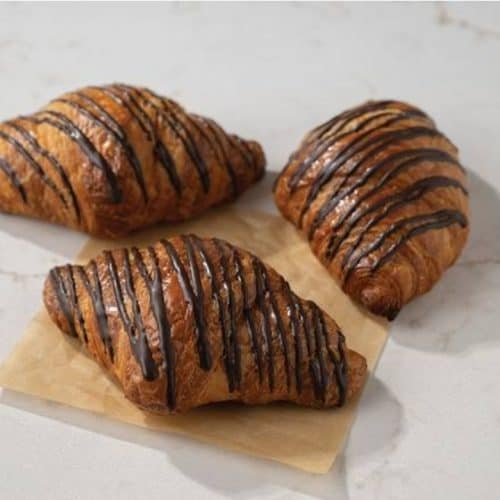
Classic Pain au Chocolat (Chocolate Croissants)
Buttery, flaky, and impossibly light laminated pastry wrapped around two bars of high-quality dark chocolate. This detailed, patient-friendly guide breaks down the art of making authentic French chocolate croissants at home, from creating the detrempe to mastering the lock-in and folds.
Rate This Recipe
Turn On Cooking Mode 💡
Equipment
Ingredients
- 4 cups bread flour high protein is essential for structure
- 1/2 cup granulated sugar
- 2 tsp instant yeast
- 1 tsp salt
- 1 1/4 cups whole milk cold
- 1/4 cup unsalted butter softened, for the detrempe (dough)
- 1 1/2 cups unsalted European-style butter cold, for the beurrage (butter block)
- 8 oz dark chocolate batons or bars high quality, at least 60% cacao, cut into 16 sticks
- 1 large egg beaten with 1 tbsp water, for egg wash
Instructions
- Make the Detrempe (Dough): In the bowl of a stand mixer fitted with a dough hook, combine the bread flour, sugar, yeast, and salt. Mix on low to combine. With the mixer running, gradually pour in the cold milk. Mix for 2-3 minutes until a shaggy dough forms. Add the softened 1/4 cup of butter and mix on medium speed for 6-8 minutes until the dough is smooth, elastic, and pulls away from the sides of the bowl. It will be slightly sticky.
- First Chill: Shape the dough into a flat, 1-inch thick rectangle. Wrap tightly in plastic wrap and refrigerate for at least 1 hour, or up to 12 hours (overnight is ideal).
- Prepare the Beurrage (Butter Block): Place the 1 1/2 cups of cold European butter between two sheets of parchment paper. Pound with a rolling pin to soften it slightly, then roll it into a neat 7x10-inch rectangle. Chill for 20-30 minutes until firm but pliable.
- Lock in the Butter: On a lightly floured surface, roll the chilled dough into a 10x15-inch rectangle. Place the chilled butter block on one half of the dough. Fold the other half of the dough over the butter, like a book. Pinch the edges tightly to seal the butter completely inside the dough package. This is the lock-in.
- First Fold (Turn 1): Turn the dough package so the folded seam is on your right. Roll it out gently into a long rectangle, about 8x24 inches. Using a dry brush, sweep off excess flour. Fold the dough into thirds, like a business letter. This is a single fold. Wrap tightly in plastic and chill for 45-60 minutes.
- Second and Third Folds: Repeat the rolling and folding process two more times, for a total of three single folds. Always start with the folded seam on your right. Chill the dough for 45-60 minutes between each fold. After the third fold, wrap the dough well and chill for at least 4-6 hours, or preferably overnight.
- Shape the Croissants: Roll the chilled dough out on a lightly floured surface into a large rectangle, about 16x12 inches and 1/4-inch thick. Trim the edges neatly. Cut the rectangle in half lengthwise, then cut each half into 4 equal rectangles (you'll have 8 total). Place two chocolate batons at the short end of a rectangle. Roll the dough tightly over the chocolate. Place the roll seam-side down on a parchment-lined baking sheet. Repeat with remaining dough.
- Final Proof: Brush the shaped croissants lightly with egg wash (avoid the cut edges). Place the baking sheets in a turned-off oven with a pan of hot water on the bottom rack. Let them proof for 1.5 to 2 hours, until they are visibly puffy and jiggle slightly when shaken.
- Bake to Perfection: Preheat oven to 375°F (190°C). Brush the proofed croissants gently with a second coat of egg wash. Bake for 18-22 minutes, rotating the pans halfway, until deeply golden brown and flaky.
- Cool and Serve: Transfer the baked chocolate croissants to a wire rack immediately. Let cool for at least 20 minutes before serving. The chocolate will be very hot. Enjoy warm or at room temperature.
Notes
🔹 Temperature is Everything: The dough and butter must be at a similar, cool temperature. If the butter is too soft, it will melt into the dough. If it's too cold, it will shatter. The ideal is cold but pliable.
🔹 European Butter is Key: It has a higher fat content (82-85%) than American butter, resulting in flakier layers and better flavor.
🔹 Patience with Proofing: Do not rush the final proof. The croissants should nearly double in size. Under-proofing will result in dense pastries.
🔹 Sharp Tools: Use a sharp knife or pizza wheel to cut the dough to avoid compressing the layers.
🔹 Make-Ahead: After shaping, you can freeze the unbaked croissants on a baking sheet. Once solid, transfer to a bag. Proof from frozen (add 1-2 hours to proofing time) before baking.
Nutrition
Calories: 580kcalCarbohydrates: 58gProtein: 9gFat: 35gSaturated Fat: 22gCholesterol: 85mgSodium: 320mgPotassium: 220mgFiber: 3gSugar: 18gVitamin A: 15IUCalcium: 4mgIron: 25mg