Pugi Korean BBQ (Fire Meat)
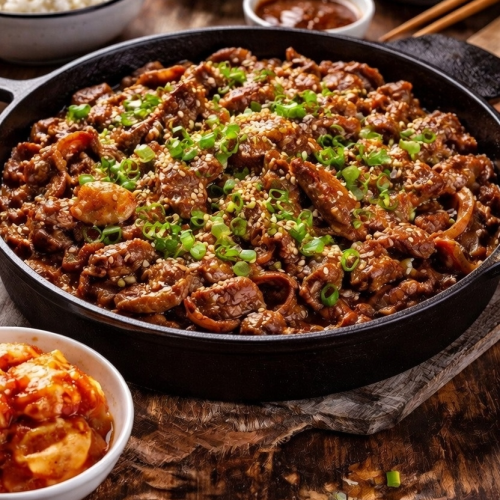
Pugi, meaning 'fire meat' in Korean, is a popular Korean BBQ dish made with thinly sliced beef marinated in a sweet and savory sauce with Korean pear, garlic, soy sauce, and sesame oil. Perfect for a quick homemade Korean BBQ experience.
Rate This Recipe
Turn On Cooking Mode 💡
Equipment
Ingredients
- 300 g beef (thinly sliced) ribeye or sirloin works best
- 3 tbsp soy sauce
- 2 tbsp sugar
- 1 tbsp sesame oil
- 1/2 tbsp oyster sauce optional
- 1/2 tbsp garlic minced
- 1/3 cup Korean pear peeled and roughly chopped
- 1/3 cup onion roughly chopped
- 1-2 scallions chopped for garnish
- 1 tbsp mirin or sake optional
- to taste black pepper
- 1 tbsp sesame seeds for garnish
- oil for cooking
Instructions
- Step 1: Prepare the Sauce Base: In a blender, combine the roughly chopped onion, Korean pear, 1/3 cup water, and minced garlic. Blend until smooth. This creates a sweet and savory base that tenderizes the beef.
- Step 2: Make the Marinade: In a large mixing bowl, add soy sauce, sugar, sesame oil, oyster sauce (optional), mirin, black pepper, and the blended sauce. Mix thoroughly into a smooth marinade.
- Step 3: Marinate the Beef: Place the thinly sliced beef into the marinade, making sure each piece is fully coated. Cover and refrigerate for at least 30 minutes, ideally 24 hours, for best flavor.
- Step 4: Prepare Vegetables: Chop scallions and any additional onions. These will be added at the end to provide freshness, color, and crunch.
- Step 5: Cook the Beef: Heat a pan or skillet over medium heat with a small amount of oil. Add the marinated beef and cook slowly, stirring occasionally. Cut larger slices into bite-sized pieces. Avoid high heat to prevent toughness.
- Step 6: Add Vegetables: When beef is about 70–80% cooked, add chopped onions and scallions. Stir gently and cook 1–2 minutes until vegetables are tender yet crisp.
- Step 7: Garnish and Serve: Transfer beef and vegetables to a serving plate. Sprinkle sesame seeds on top. Serve immediately with steamed rice, lettuce wraps, or your favorite Korean sides.
Notes
🔹 Thinly sliced beef ensures tender texture.
🔹 Marinate 30 minutes minimum, 24 hours preferred.
🔹 Korean pear is key; canned pear can substitute.
🔹 Serve with rice, lettuce wraps, or kimchi.
🔹 Adjust seasoning as needed with soy sauce, sugar, or sesame oil.
🔹 Korean pear is key; canned pear can substitute.
🔹 Serve with rice, lettuce wraps, or kimchi.
🔹 Adjust seasoning as needed with soy sauce, sugar, or sesame oil.
Nutrition
Calories: 165kcalCarbohydrates: 18gProtein: 4gFat: 9gSaturated Fat: 1gPolyunsaturated Fat: 4gMonounsaturated Fat: 4gSodium: 1634mgPotassium: 142mgFiber: 1gSugar: 14gVitamin A: 61IUVitamin C: 4mgCalcium: 60mgIron: 1mg